What Is a Combined Acid-Base Disorder?
A complex acid base disorder occurs when more than one factor is altering acid-base balance at the same moment. Rather than a single simple picture, the blood shows signs of two or more coexisting disturbances. That is important because a patient may seem acidotic, alkalotic, or even close to normal on paper while still having a significant root problem.
The most frequent combinations involve metabolic acidosis along with a different process such as respiratory alkalosis. In practice, this means one condition is decreasing bicarbonate or adding to acid load, while another is driving down carbon dioxide through hyperventilation. The effect can be misleading unless you use a thorough assessment approach and evaluate the full clinical picture.
A complex acid–base disturbance is not just a laboratory curiosity. It often indicates a significant metabolic disturbance, breathing compensation that is excessive or inadequate, or an separate problem affecting the lungs and kidneys at the same moment. Because of that, laboratory interpretation should always include serum chemistry, blood gas analysis, and the clinical context.
What Does Elevated Anion Gap Mean?
The anion gap is a computed value used to spot imbalances in electrolytes and acid-base regulation. It measures the difference between measured cations and measured anions in the serum, and it provides a clue about the presence of unmeasured anions in the bloodstream. When the elevated anion gap is present, it usually suggests that extra acids are gathering.
An increased anion gap is most closely linked to high anion gap metabolic acidosis. In this pattern, bicarbonate is used up while acids build up, leaving behind negatively charged byproducts that are not directly measured on a standard panel. These may come from lactic acid, ketones, toxins, or impaired renal function.
Understanding the anion gap helps focus the differential diagnosis. It does not tell you the exact cause by itself, but it strongly suggests that the body is dealing with a specific type of acid loading or loss of acid excretion. That is why the anion gap is such a valuable part of laboratory interpretation.
How the Anion Gap Calculator Helps Interpretation
An Anion Gap Calculator streamlines the anion gap formula simpler to apply and reduces mistakes during rapid assessment. The calculation typically uses serum sodium, serum chloride, and serum bicarbonate. Because these values are often already available on a routine metabolic panel, the calculator turns raw serum chemistry into a more useful result.
The classic formula is: sodium minus the sum of chloride and bicarbonate. That calculated value is the anion gap. A higher number supports the presence of extra unmeasured anions and may indicate a high anion gap metabolic acidosis. The calculator can also help you spot whether the pattern matches a single disorder or hints at a mixed acid-base disorder.
Using an Anion Gap Calculator is helpful because the result alone is not enough. You still need to compare it with the blood gas, the pH, the pCO2, and the patient’s symptoms. In other words, the calculator aids clinical reasoning, but it does not replace it. The best use is as part of a larger diagnostic approach that includes compensation analysis and an underlying cause review.
Common Causes of Mixed Acid-Base Imbalances With High Anion Gap
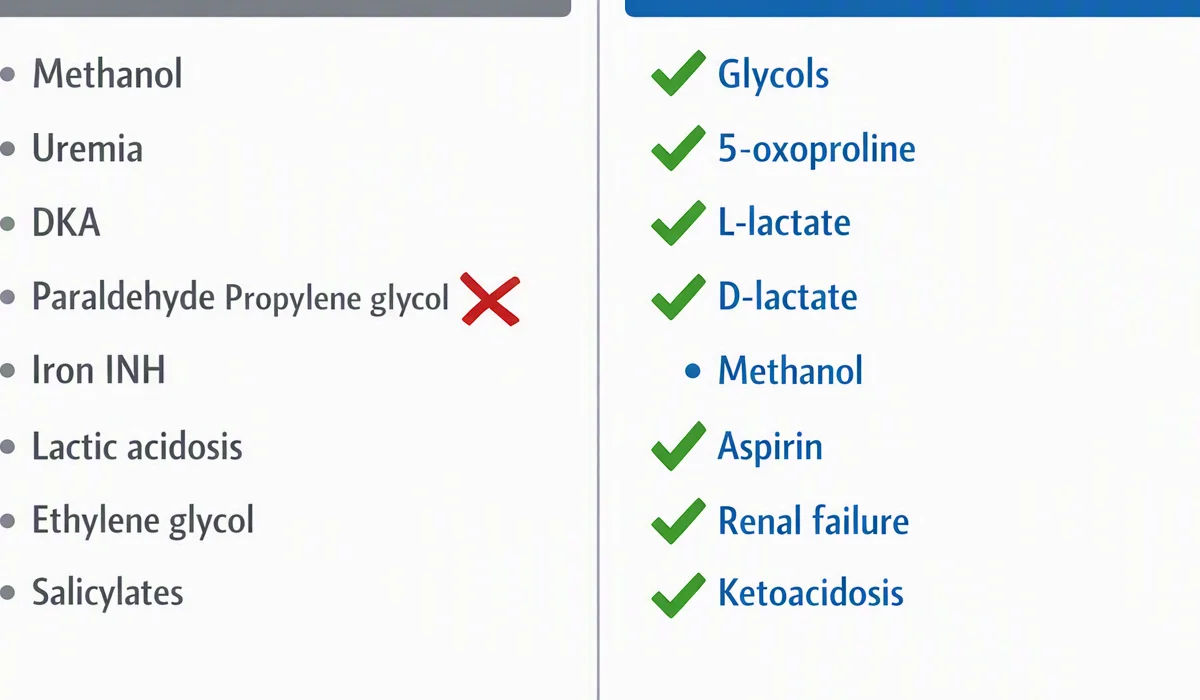
A number of conditions can cause a mixed acid-base disorder with an elevated anion gap. Some of the most common are lactic acidosis, ketoacidosis, and renal failure. Each can create a elevated anion gap metabolic acidosis, and each one can also overlap with another disorder such as respiratory alkalosis or respiratory compensation that is stronger than expected.
Lactic acidosis develops when tissues are not getting enough oxygen or when cells cannot process oxygen normally. The outcome is increased lactate production and acid accumulation. It is often seen in critical illness, inadequate blood flow, seizures, or substantial metabolic stress. If the patient is also hyperventilating, a respiratory alkalosis may coexist and make the pH not as obviously abnormal.
Ketoacidosis develops when ketone production goes up, most often in uncontrolled diabetes, prolonged fasting, or alcohol-associated metabolic stress. The ketoacids increase the anion gap and lower bicarbonate. If the person is breathing rapidly from pain, anxiety, infection, or sepsis, the blood gas may show a second abnormality on top of the acidosis.
Renal failure can also lead to retention of acids that are normally excreted by the kidneys. As kidney function worsens, unaccounted acids accumulate and the serum anion gap may go up. This can happen progressively or suddenly, and it often requires thorough review to patterns of electrolyte disturbance and the full serum chemistry profile.
Identifying a Mixed Acid-Base Disorder in Lab Results
The main step in recognizing a mixed acid-base disorder is not just seeing an abnormal number. You need to read the arterial blood gas, including pH and pCO2, together with the chemistry panel. Together, these values indicate whether the body’s response is appropriate or whether two separate processes are happening at the same time.
The blood gas can show a low pH with low bicarbonate, which fits metabolic acidosis. But if the pCO2 is lower than expected, there may also be respiratory alkalosis. That is why the idea of a mixed disorder becomes important. The pH alone may not reveal the full story, especially if compensation is masking one component.
The delta gap is an additional helpful concept. It compares the rise in anion gap with the fall in bicarbonate. If the changes do not match expected patterns, a mixed process may be present. For example, a very high anion gap with only mild bicarbonate reduction may suggest an additional metabolic alkalosis. Likewise, an unexpectedly low pCO2 may point to superimposed respiratory alkalosis rather than simple compensation.
In practical terms, abnormal labs should raise questions like: Is the pH acidemic or alkalemic? Is the pCO2 moving in the direction you would expect? Does the anion gap fit the degree of bicarbonate loss? These checks help separate a straightforward pattern from a more complex metabolic disturbance.
Stepwise Process to Interpreting Results
A clear process makes analysis much easier. Initially, examine the pH to determine whether the patient is acidotic, alkalotic, or close to normal. Then, establish whether the primary process seems metabolic or ventilatory. After that, check the serum anion gap to see whether there is evidence of high anion gap metabolic acidosis. This sequence gives a useful basis for laboratory interpretation.
Then, use Winter's formula to estimate the expected respiratory compensation for metabolic acidosis. If the measured pCO2 is significantly higher than expected, there may be an additional respiratory acidosis. If the pCO2 is much lower than expected, respiratory alkalosis may be present. This remains one of the most important steps in identifying a mixed acid-base disorder.
Finally, assess whether the observed pattern fits the expected physiology. True compensation is the body’s expected response to a primary disorder, but compensation has constraints. When the blood gas does not match the expected pattern, it implies more than one process. That is often the clue that the patient has an underlying cause requiring prompt attention.
A useful rule: if the anion gap is elevated and the pCO2 does not match the expected compensatory response, think beyond a single diagnosis and look for a separate acid-base process.
Cases of Raised Anion Gap Combined Disorders
A frequent case is a patient with sepsis who develops lactic acidosis. The infection drives tissue hypoperfusion and lactate buildup, causing high anion gap metabolic acidosis. At the same time, the patient may hyperventilate from fever, pain, or systemic stress, producing respiratory alkalosis. The blood gas can show a pH that is higher than expected because the two disorders osmolar gap with AG partially offset each other.
Another case involves toxic alcohols. These substances can generate acids that raise the anion gap, leading to severe metabolic acidosis. If the patient is also breathing rapidly due to physiologic stress, agitation, or central nervous system effects, a mixed pattern may appear. The result is a dangerous diagnostic situation that requires prompt recognition.
Salicylate poisoning is a classic mixed disorder. It often causes respiratory alkalosis early because the toxic exposure stimulates the respiratory center. Later, a high anion gap metabolic acidosis develops as acid metabolites accumulate. The combination can produce a deceptively near-normal pH, which is why blood gas analysis and serum chemistry must be reviewed together.
These examples show why laboratory interpretation matters. A patient can be severely ill even when one number seems only mildly abnormal. The anion gap formula, pH, pCO2, and clinical presentation all need to be interpreted together to identify the correct diagnosis.
When to Seek Prompt Healthcare Evaluation
Specific findings should warrant urgent healthcare evaluation, particularly when they present alongside an raised anion gap. Serious lab values such as a markedly reduced bicarbonate, severely abnormal pH, or severely elevated serum anion gap may indicate a dangerous metabolic disturbance. These results need immediate clinical attention rather than routine follow-up.
Symptoms matter just as much as lab results. Changes in mental status, confusion, severe weakness, rapid breathing, chest discomfort, or inability to stay awake can all signal a severe acid-base disorder. If the patient is not protecting the airway or cannot provide a reliable history, the urgency increases.
Shock is another important warning sign. Poor perfusion can worsen lactic acidosis and rapidly destabilize the acid-base status. In that setting, the elevated anion gap may reflect a serious underlying cause such as sepsis, toxic ingestion, or organ failure. Urgent evaluation is needed because these conditions can progress quickly.
In short, a mixed acid-base disorder with a high anion gap is not something to ignore. It can represent a serious electrolyte disorder or systemic illness that needs prompt diagnosis and treatment.
Frequently Asked Questions
What is considered an elevated anion gap?
An elevated anion gap is a above-normal result on an anion gap calculation using serum sodium, serum chloride, and serum bicarbonate. The exact cutoff can vary by laboratory because reference ranges differ, but a clearly increased value suggests excess unmeasured anions and raises concern for high anion gap metabolic acidosis. Always interpret the number with the rest of the blood gas and serum chemistry results.
How does a mixed acid-base disorder differ from a simple disorder?
A simple disorder has one primary acid-base problem with an appropriate compensatory response. A mixed acid-base disorder has several separate processes happening at the same time, such as metabolic acidosis plus respiratory alkalosis. The clue is often that the pH, pCO2, and bicarbonate do not fit the expected pattern for a single disorder.
Can a patient have both metabolic acidosis and respiratory alkalosis at the same time?
Absolutely. This represents a classic mixed acid-base disorder. It can happen in sepsis, salicylate poisoning, liver disease, or other situations where the body is producing acid while also driving hyperventilation. In these cases, the pCO2 may be lower than expected for routine compensation, and the pH may appear less deranged than the severity of illness would suggest.
What conditions most commonly cause a high anion gap?
Typical causes include lactic acidosis, ketoacidosis, renal failure, toxic alcohols, and salicylate poisoning. These conditions all generate or accumulate acids that increase the anion gap. The best differential diagnosis comes from integrating the anion gap with the arterial blood gas, clinical findings, and other laboratory interpretation clues.
How do you calculate and interpret the anion gap in lab results?
The anion gap formula uses serum sodium minus the sum of serum chloride and serum bicarbonate. Anion Gap Calculator can make that process faster and reduce calculation errors. Once you have the result, evaluate it alongside the expected compensation using Winter's formula, review the pH and pCO2, and look for signs of a combined acid-base disorder. Interpretation works best when the calculated value is matched with the patient’s symptoms and underlying cause rather than viewed alone.